ABV Testing Using Gas Chromatography.
Accurate alcohol measurement across beer, cider, and low alcohol products.
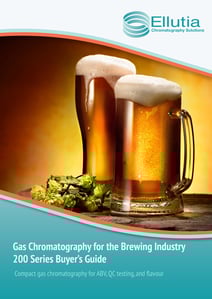
Want to learn more about choosing the right GC system for ABV analysis? Download the 200 Series GC Buyers Guide.
ABV Analysis in Beer
For standard-strength beer, gas chromatography provides fast and accurate %ABV results you can rely on for labelling, quality control, and duty reporting. Direct ethanol measurement ensures every batch meets specification without the uncertainty of density-based methods.
ABV Analysis in Alcohol-Free Beer
Accurately measuring trace levels of ethanol in alcohol-free beer can be challenging. Using gas chromatography provides a direct, reliable %ABV result at levels below 0.05%, helping brewers confirm label claims and maintain compliance with confidence.
ABV Analysis in Cider
In cider production, sugars, acids, and carbonation can all affect density-based alcohol readings. Gas chromatography measures ethanol directly, providing fast, repeatable %ABV results for duty calculations, labelling accuracy, and product consistency.
ABV Analysis in Alcohol-Free Cider
Cider presents extra challenges at trace alcohol levels due to sugars, acids, and pectins that distort density readings. Gas chromatography measures ethanol directly, giving clear, reliable results below 0.05% to support accurate alcohol-free labelling and product release.
Why GC for ABV?
Accurate measurement of alcohol by volume is central to quality control, regulatory compliance, and product consistency.
As alcohol levels decrease, measurement precision becomes more important. Small errors that are insignificant at higher strengths can have a larger impact in low and alcohol free products.
Gas chromatography with flame ionisation detection provides direct and selective quantification of ethanol, making it well suited to routine ABV testing across beer, cider, and low alcohol beverages.
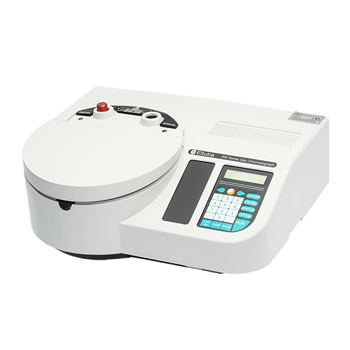
The 200 Series GC offers this capability in a compact format designed for production environments.
Get the GC Buyers Guide for Brewers
The Buyers Guide explains how the 200 Series GC can be configured for alcohol, flavour, and VDK analysis across brewing and beverage production. It covers system options, key features, and practical examples of how gas chromatography fits into your workflow.
- Learn how the system supports different alcohol analysis applications.
- Compare configurations and detector options for your testing needs.
- Understand setup, maintenance, and operating considerations for breweries and labs.
Download the buyers guide
It only takes a few moments to signup.
Frequently Asked Questions
-
Why use gas chromatography for ABV measurement?
Hydrometer and density-based methods are widely used for alcohol measurement, but they can become less reliable at low alcohol levels or in complex matrices.
Gas chromatography with flame ionisation detection measures ethanol directly and selectively. This reduces interference from sugars and other components, providing clearer quantification, particularly in low and alcohol free products.
-
How accurate is GC for low alcohol products?
At low alcohol concentrations, small measurement errors can have a proportionally larger impact.
GC-FID allows ethanol to be separated and quantified with high repeatability, making it well suited to verifying alcohol levels in products below 0.5% ABV.
Method performance will depend on calibration and sample preparation, but GC is widely used where greater precision is required.
-
Is gas chromatography suitable for routine production testing?
Yes. While GC is often associated with research laboratories, it is also used in routine production environments.
When configured for defined methods such as ABV verification, the system can be operated as part of standard quality control procedures.
Compact platforms such as the 200 Series GC are designed with routine use in mind.
-
Can one system measure both standard and alcohol free products?
A single GC system can be used to measure a wide range of alcohol concentrations, provided the method is calibrated appropriately.
This allows producers to apply consistent analytical principles across both conventional and low alcohol beverages.
-
Does ABV testing require specialist analytical expertise?
Basic GC operation can be taught and standardised within a quality control team.
While method development may require analytical input, routine ABV testing using established methods can be incorporated into structured workflows.
Support and guidance are typically provided during installation and setup.
-
Where can I find more information about the 200 Series GC?
You can download the Buyers Guide or contact our applications team for more detailed information about system configurations, setup, and the types of alcohol analysis it supports.