Nitrosamines appear in a wide range of products and processes, often at very low concentrations within complex matrices. The analytical approach that suits one application will not necessarily suit another. Detection limits, matrix interference and regulatory context all shape the method in different industries.
Pharmaceuticals
Pharmaceutical products bring a specific set of nitrosamine challenges. You are often dealing with very low limits, complex formulations and manufacturing routes that can influence impurity formation. Small differences in matrix or process can change the result.
Below, you will find common pharmaceutical scenarios, covering precursor impurities, individual APIs and finished products, along with the analytical considerations that matter in each case.
Nitrites and Nitrates in Excipients
Nitrite and nitrate impurities can act as precursors in nitrosamine formation. If you detect these early, in excipients or raw materials, you reduce the risk of formation later in the process. Screening at this stage helps you address potential issues before formulation and avoid unnecessary batch loss.
This application focuses on screening pharmaceutical excipients for nitrite and nitrate as part of a preventative control strategy.
Metformin products brought renewed attention to nitrosamine control in finished dosage forms. NDMA can form within the product matrix, and regulatory limits are set at very low daily exposure levels. That means your method needs to detect trace contamination reliably, without interference from a high-mass API background.
This application focuses on screening metformin tablets for total nitrosamines, with calculation of NDMA levels against current exposure limits.
Ranitidine highlighted how nitrosamines can be present in finished products at levels above acceptable daily limits. In this case, NDMA was detected, but the chromatogram also indicated additional nitrosamine-related species within the sample matrix.
This application demonstrates selective detection of nitrosamines in ranitidine using GC-TEA, with emphasis on identifying specific compounds and revealing related species that may not be visible using non-selective methods.
Sartan APIs and finished products have been subject to detailed review for nitrosamine impurities. Manufacturing routes, solvents and reaction conditions can influence the formation of compounds such as NDMA, which must be controlled against strict daily exposure limits.
This application demonstrates selective quantification of nitrosamines in Sartan tablets using GC-TEA, with sensitivity aligned to regulatory thresholds and clear confirmation of compliant levels.
Nitrosamine formation in cosmetics and personal care products is a specific compliance challenge. Amine-based ingredients such as DEA and TEA are widely used as emulsifiers and pH adjusters. Under the right conditions, they react with nitrosating agents to produce NDELA and other nitrosamines. EU Cosmetics Regulation EC 1223/2009 sets a limit of 50 μg/kg for total nitrosamines in finished products.
Nitrosamine Testing in Cosmetics and Personal Care Products
How ATNC analysis and GC-TEA are used to demonstrate compliance with the EU 50 μg/kg limit. Covers formation routes, testing approaches, and the case for in-house testing.
Food and drink production brings its own nitrosamine considerations. You may be dealing with raw materials where formation can occur during processing, particularly where heat and nitrogen-containing compounds are involved. The levels are often low, and the surrounding matrix can make selective detection difficult.
Below, you will find applications focused on measuring specific nitrosamines in food ingredients, with methods suited to complex organic matrices.
Analysis of NDMA in Malt
NDMA can form in malt during certain processing steps. When you are working with raw materials, even low concentrations matter, especially if that ingredient is used repeatedly or at scale. The analytical difficulty comes from detecting trace NDMA within a complex organic matrix.
This application focuses on selective detection of NDMA in malt, with attention to matrix interference and low-level measurement.
Rubber and elastomer products bring a different set of nitrosamine questions. You may be dealing with emissions from finished products, or with residual compounds formed during curing and processing. The matrix is different, but the requirement is the same. You need clear identification at low levels without interference from other volatile species.
Below, you will find applications focused on detecting nitrosamines in rubber and elastomer materials.
Nitrosamines in Rubber and Elastomers
Nitrosamines can form during the curing of rubber and elastomer materials, particularly where secondary amines are present. These compounds may be released as emissions or remain within the finished product.
This application focuses on selective detection of nitrosamines in rubber and elastomer samples.
Nitrosamines are also relevant in environmental and industrial systems. You may encounter them in process streams, solvent systems or treatment technologies where amines are present. The analytical challenge often involves low concentrations in chemically active matrices.
Below, you will find applications focused on monitoring nitrosamines in emerging industrial contexts.
Nitrosamines in Carbon Capture
Amine-based carbon capture systems can generate nitrosamines as degradation products under certain operating conditions. Monitoring these compounds helps you understand solvent stability and potential environmental impact.
This application focuses on detecting nitrosamines in carbon capture solvent systems, with methods suited to reactive and complex process matrices.
The Instruments Behind These Applications
The applications outlined above use two established analytical approaches. In some cases, you need selective detection of specific nitrosamines. In others, you need broader screening to assess overall risk before taking further action.
Selective Detection with the Thermal Energy Analyser (TEA)
When you are targeting defined compounds such as NDMA or NDEA, selectivity matters. Complex matrices can contain many co-eluting compounds, and non-selective detection increases the chance of interference.
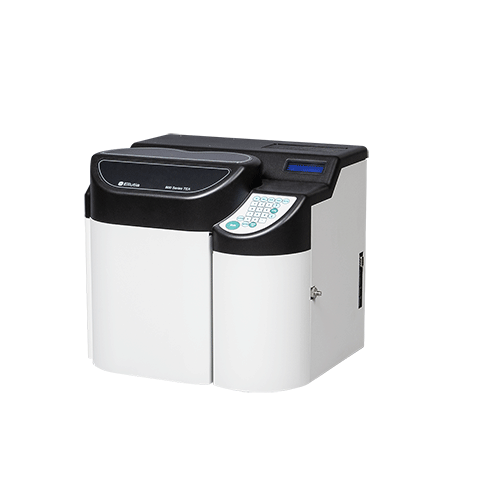
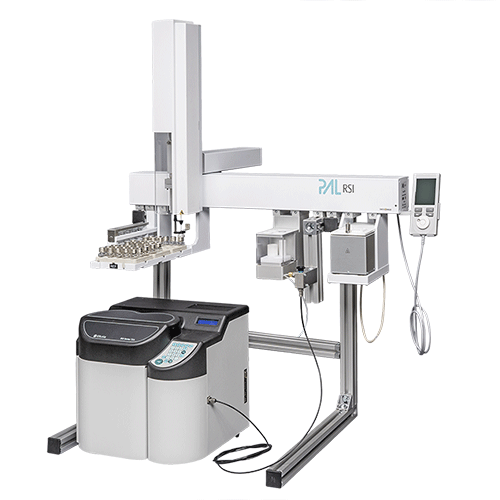
The Thermal Energy Analyser is used as a detector coupled to a gas chromatograph. The GC provides separation of individual compounds, and the TEA responds specifically to the nitrosamine functional group. Together, this allows clear identification and quantification of individual nitrosamines at low levels.
This approach is commonly used for confirmatory analysis in pharmaceutical and industrial applications.
Total Nitrosamine Screening with the ATNA
In screening applications, you may not be targeting a single compound. Instead, you need to determine whether nitrosamines are present at all.
The ATNA detects the N=O functional group common to nitrosamines, allowing assessment of total nitrosamine content across a sample. This approach is suited to excipient screening, raw material control and early-stage process monitoring.
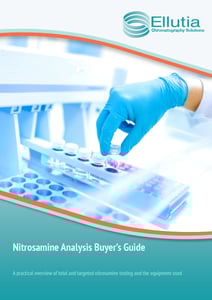
Get the Nitrosamine Analysis Buyers Guide
The Buyers Guide explains the available approaches for nitrosamine detection and screening across pharmaceutical, food, material and environmental applications. It outlines when selective detection is required, when total screening is appropriate, and how different system configurations fit into your workflow.
Learn when to use selective detection for specific nitrosamines
Compare screening and confirmatory approaches for your application
Understand system configuration, method considerations, and analytical limits
Selective detection targets individual, defined nitrosamines such as NDMA or NDEA, used when specific compounds need confirming and quantifying against regulatory limits. Total nitrosamine screening measures the N=O functional group common to all nitrosamines, giving an overall indication of presence rather than identifying individual compounds, and is often used for raw material screening or early-stage process control.
For separation and identification of specific nitrosamines, gas chromatography is used with a selective detector such as the TEA, where the GC separates compounds and the detector responds specifically to the nitrosamine functional group. For total nitrosamine screening rather than compound identification, automated systems can provide a broader assessment without gas chromatography.
Limits depend on the specific compound, dosage, and acceptable daily intake for the product under review, but many pharmaceutical applications require detection in the low parts-per-billion range or below.
Yes. Nitrosamines form when secondary amines react with nitrosating agents such as nitrite, which can happen during pharmaceutical manufacturing, food processing, rubber curing, or within industrial solvent systems. Monitoring precursors and degradation pathways reduces the risk of formation.
Screening suits assessing risk across multiple samples or materials before deciding on further action. Confirmatory analysis is used once specific compounds need identifying and quantifying against defined limits. Many workflows use both together, screening first, then confirmatory testing on samples that flag a risk.
EU Cosmetics Regulation (EC) 1223/2009 sets a limit of 50 μg/kg for total nitrosamines in finished cosmetic and personal care products.