Nitrosamine Analysis Buyers Guide
Understanding how nitrosamines are tested and the equipment used.
See what total analysis offers as an overall indicator and how targeted analysis provides compound specific data. Learn how these approaches complement each other, how they fit into routine checks or detailed investigations, and how different systems handle the workflow so you can choose an option that fits your requirements.
Testing Approaches
Understand how total and targeted analysis differ, what each one measures, and the type of information they provide. See how these approaches support screening, investigations, and regulated reporting.

System Options
Compare automated, manual, and GC based setups. Learn how each system handles throughput, workflow, and hands on time, and where each option fits depending on your testing needs.

Setup Considerations
Review space, gas supply, staffing, and day to day workflow considerations. See how each system integrates into your laboratory so you can choose the option that aligns with your requirements.
Inside the Buyers Guide
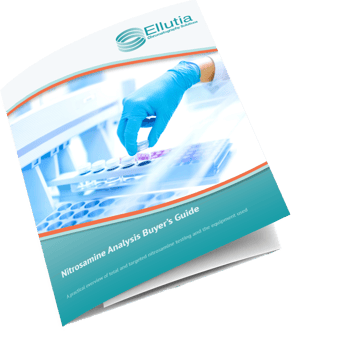
The buyers guide explains how nitrosamines form, how they are measured, and where total and targeted analysis fit into routine testing or investigation work. It gives you a clear view of the strengths of each approach, the systems used, and the practical considerations that influence which setup is the best match for your laboratory.
Formation
See how nitrosamines develop during production, storage, and material handling, and what factors increase or reduce the risk
Total Analysis
Understand how total nitrosamine testing works, what the single value represents, and when this approach is most useful.
Targeted Analysis
Learn how individual nitrosamines are separated and measured and why this data supports investigation and regulated reporting.
System Types
Compare automated, manual, and GC based systems and see how each one fits different workloads and operational needs.
Choosing a Route
Follow a simple decision tree that highlights when total analysis is sufficient and when targeted testing adds the detail required.
Setup
Review space, gas supply, workflow, and day to day operational considerations to understand what each system needs in practice.
Download to Learn More
Get a clear overview of the options for nitrosamine testing. See how total and targeted analysis differ, what the supporting systems require, and how the workflow fits into routine checks or investigative work in your laboratory.
Download the Buyers Guide
Frequently Asked Questions
-
What is the difference between total and targeted nitrosamine analysis?
Total analysis gives a single value for all nitrosamines present. Targeted analysis separates and measures individual nitrosamines. Total testing is often used for screening or tracking trends, while targeted testing provides compound specific data suited to investigation and reporting.
-
Do I need both types of testing?
Some workflows rely on total analysis alone. Others use total testing as an early indicator and add targeted analysis when detailed values or identification are required. The choice depends on your workload, reporting needs, and the type of information you need from the data.
-
What sample types can be tested for nitrosamines?
Solids, liquids, and many processed materials can be analysed. Preparation steps vary depending on the matrix, but the underlying detection principles remain consistent across total and targeted systems.
-
How sensitive is the TEA detector?
The TEA responds selectively to the NO group found in all nitrosamines. This selectivity allows low-level detection even in complex backgrounds. Sensitivity depends on preparation and method conditions but is well suited to regulated nitrosamine work.
-
Do I need a GC-MS/MS system?
GC-MS/MS can measure nitrosamines, but GC-TEA provides selective detection of the NO group and highlights known and unexpected nitrosamines clearly. This makes GC-TEA effective for regulated reporting, investigations, and routine speciated work.
-
How quickly can results be obtained?
For total analysis, most time is spent on preparation. Once nitric oxide is released, detection is very fast. GC-TEA run times depend on the chromatographic method, but peaks are detected as they elute. Automated systems can run samples unattended, including overnight, which helps shorten turnaround.