Food Analysis Applications.
Ellutia gas chromatographs are used across food production and packaging to analyse composition, authenticity, and contamination. From fatty acid profiling in edible oils to residual solvent testing in packaging and targeting nitrogen compound detection in dairy products, the 200 Series GC is the tool for routine lab analysis.
Want to learn more about how the 200 Series can help you with your food testing? Download the brochure below.
F.A.M.E. Analysis
Fatty acid methyl ester profiling is widely used to confirm the authenticity and composition of edible oils. By measuring the relative ratios of individual fatty acids, manufacturers can identify adulteration and verify labelling information. The 200 Series GC with FID provides clear separation of key components such as oleic and linoleic acid, supporting routine oil analysis.
Residual Solvents in Printed Packaging
Printed packaging can retain residual ink solvents that may affect food quality and safety. Headspace gas chromatography allows these volatile compounds to be isolated and quantified before products reach the consumer. The 200 Series GC with FID and headspace sampling provides reliable detection of alcohols, ethers, acetates, and other organic solvents.
Melamine in Milk Powder
Melamine contamination in dairy products has led to significant food safety concerns. Using the 200 Series GC paired with a TEA detector in nitrogen mode allows selective detection of nitrogen-containing compounds. This configuration enables laboratories to target melamine with high sensitivity while avoiding interference from proteins such as casein.
The Instrument Behind Every Application
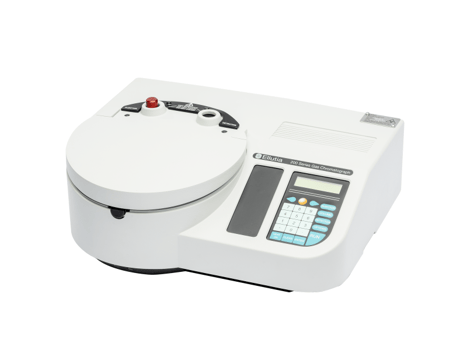
The Ellutia 200 Series GC offers a compact, configurable platform for food analysis. Its small footprint makes it suitable for routine QA laboratories, while detector options allow it to be tailored to specific analytical requirements.
Compact
Fits easily into small lab spaces or production environments.
High Sensitivity
Detects ethanol and trace compounds down to parts per billion levels.
Fast Analysis
Typical runs complete in just a few minutes.
Flexible Configuration
Supports detectors, columns, and methods for alcohol, flavour, and VDK analysis.
Low Operating Cost
Eco friendly design using a heat exchanger system.
Simple Maintenance
Designed for straightforward upkeep and long-term reliability.
Download the 200 Series GC Brochure
Learn how the 200 Series GC can be configured for food and packaging analysis. The brochure outlines available detector options, example configurations, and practical considerations for laboratory integration.
Download the 200 Series Brochure
Frequently Asked Questions
-
Can one GC system run multiple food applications?
Yes. A single 200 Series GC can be configured with an FID for FAME and residual solvent testing. When paired with a TEA detector, the same platform can also be used for selective nitrogen compound analysis such as melamine detection.
-
Is gas chromatography suitable for routine food QA labs?
Yes. GC is widely used in food testing laboratories for composition analysis, solvent screening, and contamination checks. The 200 Series GC is designed to fit into standard laboratory workflows without requiring large amounts of space or power.
-
Why use headspace sampling for packaging analysis?
Headspace sampling isolates volatile compounds from packaging materials before injection into the GC. This reduces interference from non-volatile components and improves repeatability when measuring solvent residues.
-
What detector is used for melamine analysis?
Melamine detection uses a TEA detector operating in nitrogen mode, paired with the 200 Series GC. This configuration selectively targets nitrogen-containing compounds.