


Understanding LPG Composition Testing
LPG composition testing is used to verify product quality, confirm cargo specifications and monitor propane and butane ratios during storage and distribution. Gas chromatography is widely used for LPG analysis because it separates and measures the hydrocarbons present in LPG, providing the compositional data used for these checks.
✔ Covers LPG testing workflows used at terminals and distribution facilities
✔ Explains standards such as ASTM D2163 and EN 589
✔ Practical guidance on LPG GC configuration
Verify LPG cargo and product specifications
LPG composition testing confirms that incoming cargo matches the expected specification before it enters storage or distribution.
Gas chromatography separates and measures the hydrocarbons present in LPG, allowing operators to verify compliance with specifications such as ASTM D1835 and EN 589.
Understand LPG composition and hydrocarbons
LPG contains a mixture of hydrocarbons that influence vapour pressure, energy content and product behaviour.
Gas chromatography separates these hydrocarbons and measures their concentration, providing a detailed view of LPG composition.
Select the right GC configuration
Gas chromatography systems used for LPG testing must be configured to handle pressurised LPG samples and separate the relevant hydrocarbons.
This includes selecting the appropriate sampling approach, column and detector for LPG composition analysis.
Why LPG Composition Testing Matters
LPG is traded and distributed based on composition. The proportions of propane, butane and related hydrocarbons influence product behaviour during storage, transport and end use.
Understand how gas chromatography separates these hydrocarbons and generates the compositional data used to verify LPG specifications and product quality.
Where LPG Composition Analysis Is Required
LPG composition testing takes place at several points in the supply chain.
See where testing is typically carried out, including import terminals, storage and blending facilities, distribution depots and quality control laboratories.
Standards Used in LPG Testing
Several recognised standards define how LPG composition is measured and reported.
Understand how standards such as ASTM D2163, ASTM D1835, ASTM D2598, ASTM D2421 and EN 589 are used in LPG testing workflows.
Hydrocarbons Measured in LPG Analysis
Gas chromatography separates the hydrocarbons present in LPG so each component can be measured individually.
Learn which hydrocarbons are typically reported in LPG GC analysis, including propane, propene, butanes, butenes and pentanes.
LPG Sampling and Sample Introduction
LPG is stored as a liquid under pressure, which affects how samples are introduced to the gas chromatograph.
Understand the difference between liquid and vapour sampling and how LPG samples are introduced to the GC system.
Selecting a GC System for LPG Testing
Gas chromatography systems used for LPG analysis must be configured to separate the hydrocarbons present in the sample and handle pressurised LPG.
Learn the main factors involved in configuring a GC system, including sampling method, column selection and detector choice.
.
Who Uses LPG Composition Testing?
LPG composition testing is carried out in laboratories and facilities that handle LPG production, storage or distribution.
The information in this guide is most relevant for:
.
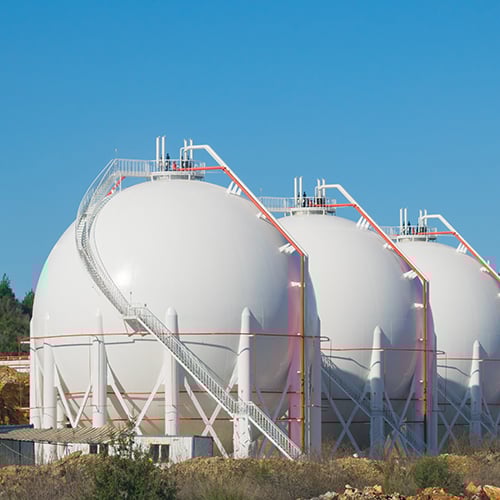
Verify LPG cargo composition before offloading into terminal storage.
Gas chromatography provides the compositional data used to confirm that incoming LPG matches the expected propane and butane specification.
Monitor LPG composition during storage and blending operations.
Gas chromatography measures LPG hydrocarbons and confirms that propane-to-butane ratios match the required product specification.
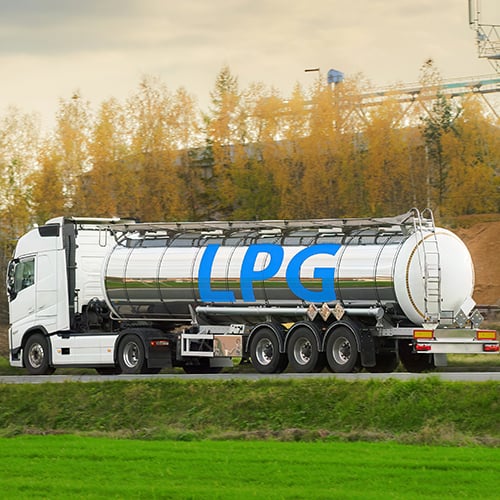
Confirm LPG composition before product is transferred to road tankers or cylinder filling systems.
Testing at this stage verifies that the product being delivered meets the required specification.
Measure LPG composition as part of routine quality control and product verification.
Gas chromatography separates the hydrocarbons present in LPG so each component can be measured and reported.
If you are evaluating LPG testing methods, we can review your application.
Download to Learn More
Understanding LPG composition testing requires clear information on both the analytical method and the GC system configuration.
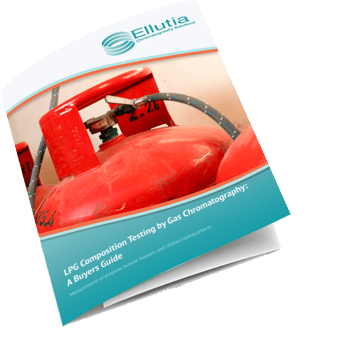
The LPG Composition Testing Buyers Guide brings this information together in a single technical resource covering LPG testing workflows, standards and gas chromatography system configuration.
Download the guide to see:
• how LPG composition is measured using gas chromatography
• where LPG testing takes place across the supply chain
• the hydrocarbons typically measured during LPG analysis
• how LPG samples are introduced to the GC system.
• factors involved in configuring a GC system for LPG testing
Download the Buyers Guide
Frequently Asked Questions
-
What components are measured during LPG composition testing?
LPG composition testing typically measures hydrocarbons in the C3 to C5 range.
The main components include propane, propene, isobutane, n-butane, butenes and pentanes. The concentration of these hydrocarbons defines the overall LPG composition and influences properties such as vapour pressure and fuel behaviour.
-
How is LPG introduced to a gas chromatograph?
LPG samples can be introduced to a gas chromatograph as either a liquid or a vapour.
Liquid sampling injects a pressurised LPG sample directly into the GC using a sampling valve. Vapour sampling introduces a vaporised portion of LPG through a gas sampling valve. Both approaches are used in industry depending on the sampling system and testing method.
-
Which standards are commonly used for LPG testing?
Several standards define how LPG composition is measured and how results are used.
Common examples include ASTM D2163 for hydrocarbon composition, ASTM D1835 for LPG product specifications, ASTM D2598 for calculating LPG properties from composition and EN 589 for automotive LPG fuels.
-
How long does an LPG GC analysis take?
Analysis time depends on the column and method used.
Most LPG GC methods are designed to balance separation quality with laboratory throughput, allowing laboratories to analyse multiple samples during routine testing operations.
-
Where are LPG GC systems typically installed?
LPG composition testing is commonly carried out in:
• import terminals
• LPG storage and blending facilities
• distribution depots
• quality control laboratoriesThese systems are used to verify LPG composition before offloading cargo and to monitor product quality during storage and distribution.
-
Does the guide explain how LPG GC systems are configured?
Yes. The guide explains the key components of an LPG gas chromatography system, including detectors, columns and sampling methods.
It also outlines the factors involved when selecting and configuring a GC system for LPG composition analysis.